GPUs ranking
Best AMD GPUs
This Radeon shortlist separates six very different buys: a $299 1080p option, three 1440p value steps, two current-generation 9070 models, and a discounted 4K-oriented 7900 XTX. Start with target resolution and the games you actually play, then check the exact board against your case, power supply, and current street price.
Updated 2026-08-23
Scores are editorial estimates based on public product data and the published category weights; they are not lab measurements.
Quick picks
Jump straight to the right product for your situation.
Best overall
Best value
Premium or specialist
Top pick
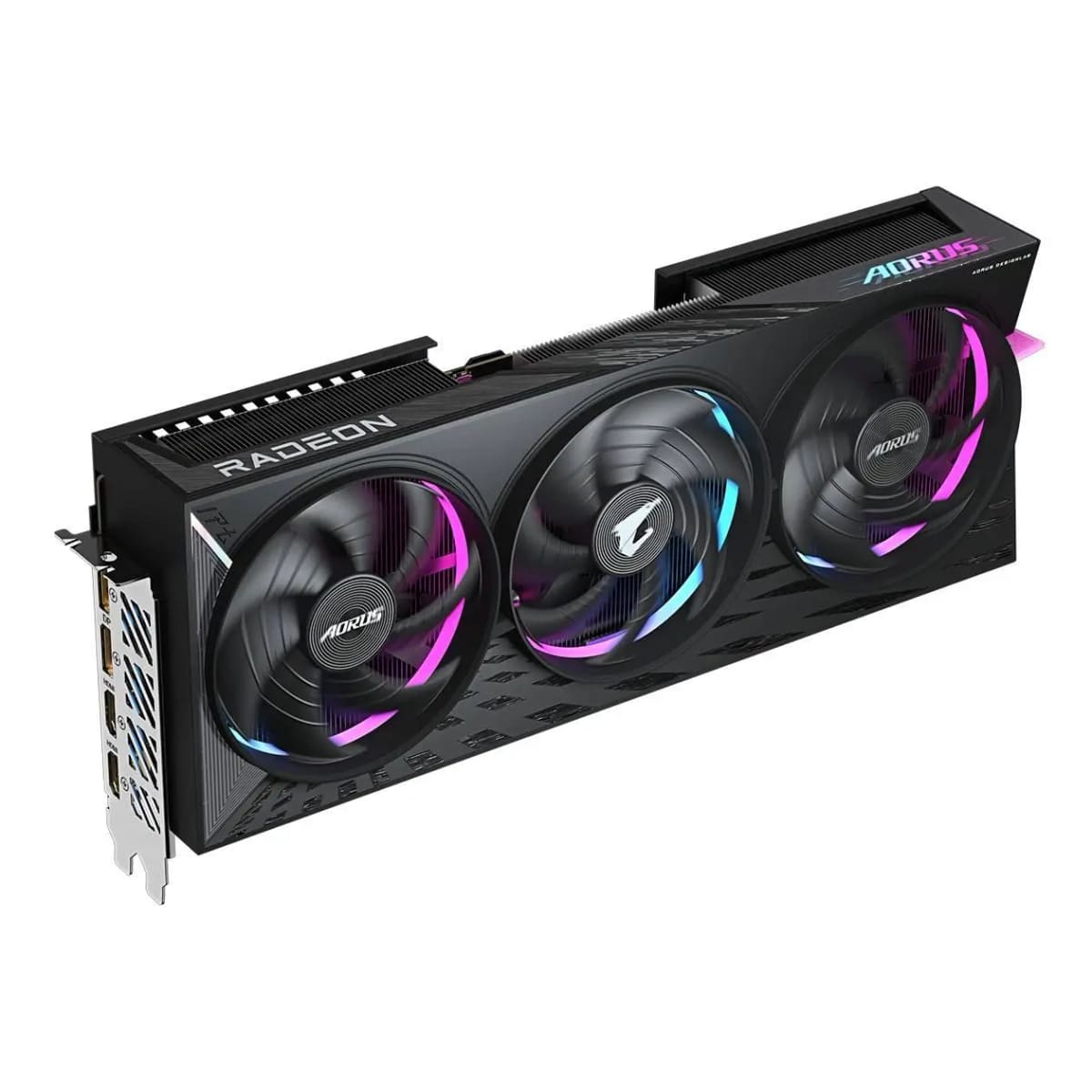
Radeon RX 9070 XT
Radeon RX 9070 XT is best suited to 1440p ultra and value 4K. Compare alternatives if this documented drawback would undermine that fit: Ray tracing still trails higher-tier cards in demanding titles.
- 1Editorial 8.6 / 10
Radeon RX 9070 XT
Radeon RX 9070 XT is best suited to 1440p ultra and value 4K. Compare alternatives if this documented drawback would undermine that fit: Ray tracing still trails higher-tier cards in demanding titles.
Why it ranks here
Radeon RX 9070 XT earns a place for 1440p ultra and value 4K. At $509, its clearest advantage is strong everyday fit for 1440p ultra. 8 published specification fields have source coverage; unbadged fields remain reference data.
Buyer note
The main reason to hesitate is the documented drawback: Ray tracing still trails higher-tier cards in demanding titles. Confirm the exact configuration, cited-field badges, retailer return window, and current price before treating its position as a purchase instruction.
Gaming 1440p
9
Gaming 4K
8.5
Ray Tracing
8.3
- 2Editorial 8.5 / 10
Radeon RX 9070
Radeon RX 9070 is best suited to efficient 1440p and 16GB value builds. Compare alternatives if this documented drawback would undermine that fit: Street pricing swings hard around new-generation launches.
Why it ranks here
Radeon RX 9070 earns a place for efficient 1440p and 16GB value builds. At $467, its clearest advantage is strong everyday fit for efficient 1440p. 2 published specification fields have source coverage; unbadged fields remain reference data.
Buyer note
The main reason to hesitate is the documented drawback: Street pricing swings hard around new-generation launches. Confirm the exact configuration, cited-field badges, retailer return window, and current price before treating its position as a purchase instruction.
Gaming 1440p
8.7
Gaming 4K
7.9
Ray Tracing
8
- 3Editorial 8.5 / 10
Radeon RX 7900 XTX
Choose Radeon RX 7900 XTX for a high-end AMD card with 24GB memory and strong high-resolution capability. Confirm the particular card's size, PCIe interface, pricing and outputs before buying; the cited AMD page describes a 287mm, 2.5-slot reference design.
Why it ranks here
Radeon RX 7900 XTX earns a place for 4K raster and creator VRAM. At $799, its clearest advantage is AMD specifies 24GB GDDR6 memory, up to 960GB/s bandwidth and a 96MB Infinity Cache. 13 published specification fields have source coverage; unbadged fields remain reference data.
Buyer note
The main reason to hesitate is the documented drawback: AMD lists 355W typical board power and an 800W minimum PSU recommendation. Confirm the exact configuration, cited-field badges, retailer return window, and current price before treating its position as a purchase instruction.
Gaming 1440p
9.3
Gaming 4K
9
Ray Tracing
7.8
- Editorial 8.14
Radeon RX 7800 XT
Radeon RX 7800 XT is best suited to 1440p value and 16GB VRAM. Compare alternatives if this documented drawback would undermine that fit: Ray tracing still trails higher-tier cards in demanding titles.
Why it ranks here
Radeon RX 7800 XT earns a place for 1440p value and 16GB VRAM. At $429, its clearest advantage is strong everyday fit for 1440p value. 12 published specification fields have source coverage; unbadged fields remain reference data.
Buyer note
The main reason to hesitate is the documented drawback: Ray tracing still trails higher-tier cards in demanding titles. Confirm the exact configuration, cited-field badges, retailer return window, and current price before treating its position as a purchase instruction.
- Editorial 7.75
Radeon RX 7700 XT
Radeon RX 7700 XT is best suited to discounted 1440p and midrange upgrades. Compare alternatives if this documented drawback would undermine that fit: Ray tracing still trails higher-tier cards in demanding titles.
Why it ranks here
Radeon RX 7700 XT earns a place for discounted 1440p and midrange upgrades. At $349, its clearest advantage is strong everyday fit for discounted 1440p. 10 published specification fields have source coverage; unbadged fields remain reference data.
Buyer note
The main reason to hesitate is the documented drawback: Ray tracing still trails higher-tier cards in demanding titles. Confirm the exact configuration, cited-field badges, retailer return window, and current price before treating its position as a purchase instruction.
- Editorial 7.16
Radeon RX 7600 XT
Radeon RX 7600 XT is best suited to VRAM-heavy 1080p and light 1440p. Compare alternatives if this documented drawback would undermine that fit: Ray tracing still trails higher-tier cards in demanding titles.
Why it ranks here
Radeon RX 7600 XT earns a place for VRAM-heavy 1080p and light 1440p. At $299, its clearest advantage is strong everyday fit for VRAM-heavy 1080p. 12 published specification fields have source coverage; unbadged fields remain reference data.
Buyer note
The main reason to hesitate is the documented drawback: Ray tracing still trails higher-tier cards in demanding titles. Confirm the exact configuration, cited-field badges, retailer return window, and current price before treating its position as a purchase instruction.
Buying guide
Start with resolution and software fit
This list is for buyers who want a Radeon card but still need to choose between inexpensive 1080p capacity, strong 1440p value, and 4K headroom. Build the shortlist from recent results for your games at your monitor's resolution, then remove any card that does not fit the case, power supply, display outputs, or application requirements. If a creator workflow requires CUDA or another vendor-specific feature, settle that requirement before comparing Radeon prices.
How the six Radeon tiers differ
RX 9070 XT and RX 9070 lead for current-generation 1440p buyers, with a $50 tracked gap that must be justified by measured performance. RX 7900 XTX is the specialist 4K and large-memory option, while RX 7800 XT and RX 7700 XT are the discounted 1440p steps. RX 7600 XT belongs at the budget end when its 16GB capacity matters more than moving to a faster tier.
Use price gaps, not model names
The meaningful decisions are the $50 gap from RX 9070 to 9070 XT, the $80 gap from RX 7700 XT to 7800 XT, and the much larger jump from midrange cards to RX 7900 XTX. Compare cost per useful frame in your own game set, but also inspect one-percent lows, ray tracing, upscaling quality, memory use, and total board cost. A partner-card premium that adds noise or size without useful performance is not an upgrade.
A three-check rule before checkout
Buy after the exact SKU passes three checks: its street price is near or below the reference used here, sustained results cover the games and resolution you care about, and the board fits the case and power supply without another expensive change. Wait when only inflated inventory is available, when a near-tier alternative has the same practical result for less, or when your current card already meets the monitor's resolution and frame-rate target. Re-run the comparison whenever prices move.
How we picked
- We prioritize 1440p performance, 4K headroom, VRAM, ray tracing, power draw, cooler size, and street price over isolated launch hype or one-off benchmark wins.
- US pricing, return windows, official availability, and discount timing influence the order.
- Every pick needs a clear buyer profile, a clear reason to skip, and at least one useful alternative.
- Older products can rank when discount pricing creates better long-term value than a new but weaker model.
Budget advice
The tracked ladder is $299 for RX 7600 XT, $349 for RX 7700 XT, $429 for RX 7800 XT, $549 for RX 9070, $599 for RX 9070 XT, and $799 for RX 7900 XTX. Spend the next step only when recent tests show a useful gain at your monitor resolution or when additional memory headroom prevents a known limitation. Include the power supply and any case or cooling change in the comparison.
Buying timing
Re-check Radeon pricing around GPU launches, holiday promotions, monitor upgrades, and clearance periods. Buy when the exact partner card fits the system and reaches the value band used by this ranking; wait when the model is materially above the tracked reference or when only an unwanted oversized or factory-overclocked board is available. A discounted older card still needs a full warranty and current game support.
Product sources and verification
Ranking order is editorial. The links below support identified product specification fields; unbadged data, current prices, configurations, and regional availability still require a checkout-time check.
- AMD Radeon RX 9070 XT product specifications · Radeon RX 9070 XT · accessed 2026-07-29
- AMD Radeon RX 9070 product specifications · Radeon RX 9070 · accessed 2026-07-29
- AMD Radeon RX 7900 XTX product specifications · Radeon RX 7900 XTX · accessed 2026-07-30
- AMD Radeon RX 7800 XT specifications · Radeon RX 7800 XT · accessed 2026-07-29
- AMD Radeon RX 7700 XT specifications · Radeon RX 7700 XT · accessed 2026-07-29
- AMD Radeon RX 7600 XT specifications · Radeon RX 7600 XT · accessed 2026-07-29
FAQ
How should I choose from Best AMD GPUs?
Start with the product that matches your use case, then use the notes to remove options with trade-offs you would notice every day.
Should I wait for a sale?
Wait if pricing is still near launch level or if GPU launches is close. Buy now if the top pick fixes a real reliability problem.
Do older discounted products still make sense?
Yes, when support, warranty, performance, and battery or comfort expectations are still acceptable for your ownership window.
Related comparisons
Intel Arc A770 vs Intel Arc B580: Which Should You Buy?
Compare Intel Arc A770 and B580 by 16GB versus 12GB capacity, current 1440p value, board power, PCIe fit, application support, and price.
Intel Arc B570 vs Intel Arc B580: Which Should You Buy?
Compare Intel Arc B570 and Intel Arc B580 by 1440p performance, 4K headroom, VRAM, ray tracing, power draw, cooler size, and street price, price,.
Intel Arc B570 vs Radeon RX 7600: Which Should You Buy?
Compare Intel Arc B570 and Radeon RX 7600 by 1440p performance, 4K headroom, VRAM, ray tracing, power draw, cooler size, and street price, price,.
Related guides
1080p GPU Buying Guide
1080p GPU Buying Guide for North America shoppers, with practical links to products, rankings, comparisons, and category pages.
1440p vs 4K GPU Buying Guide
Choose between 1440p and 4K gaming by target frame rate, game type, upscaling quality, VRAM, monitor size, and total system cost.
DLSS vs FSR vs XeSS: Upscaling Compared
DLSS vs FSR vs XeSS: Upscaling Compared for North America shoppers, with practical links to products, rankings, comparisons, and category pages.